A shed workshop should give you the freedom to build, repair, and create without worrying about every saw cut or hammer strike bothering the people around you. The good news is that you do not need a commercial-grade soundproof room to make a noticeable difference. A few smart design choices, better insulation, and some thoughtful habits can keep noise under control while making your workshop more comfortable to work in.
This guide walks you through the practical side of building a noise-friendly shed workshop. You will learn where most workshop noise comes from, which soundproofing upgrades are actually worth the money, and how simple changes to your layout can reduce the amount of sound that escapes your shed. You will also see why good relationships with your neighbors often matter just as much as the materials you install.
Start by Understanding Where Workshop Noise Comes From

Many people assume the walls are the biggest problem, but noise escapes through almost every part of a shed. Once you know the main paths sound follows, it becomes much easier to decide where your money should go.
Power tools create two different kinds of noise. The first is airborne noise, which comes from motors, blades, dust collectors, and air compressors. The second is vibration noise, where the tool transfers movement into your workbench, the floor, and eventually the shed itself. That vibration can travel surprisingly far, especially in lightweight wooden buildings.
Some of the loudest workshop tools include:
- Table saws
- Mitre saws
- Planers
- Thickness planers
- Air compressors
- Shop vacuums
- Dust collection systems
- Belt sanders
- Routers
Even relatively quiet tools become much louder when they echo inside an empty shed with bare plywood walls. Hard surfaces reflect sound instead of absorbing it, so every cut feels sharper than it really is.
Another factor people overlook is the location of the noisy tool. A table saw sitting next to a window will send far more sound outside than the same saw positioned toward the centre of the workshop with insulated walls between it and your property line.
Before buying any soundproofing materials, spend some time inside your shed while each major tool is running. Walk around the outside as well. You will often notice certain walls, windows, or doors leak much more noise than others.
Build the Shed Layout With Noise in Mind
A smart workshop layout can reduce noise before you spend a dollar on insulation. Simply moving equipment around often has a bigger effect than people expect.
Try placing your loudest machines against interior walls rather than exterior ones. This gives sound more material to travel through before reaching the outside. Large storage cabinets, lumber racks, and shelving units also help interrupt sound waves while adding useful storage.
Keep quieter work areas separate from machine zones whenever possible. Assembly benches, sharpening stations, and finishing tables do not need to sit beside the loudest equipment.
A practical layout often includes:
- Heavy stationary tools near the middle of the shed
- Workbenches away from windows
- Storage shelves along outside walls
- Dust collection equipment tucked into insulated corners
- Compressors are placed inside sound-reducing cabinets with proper ventilation
The direction your shed faces can also make a difference. A door that opens toward your own garden instead of a neighbour’s patio naturally keeps more noise away from shared outdoor spaces.
Finally, think about what surrounds the shed. Fences, hedges, shrubs, and even small earth berms can soften the amount of sound that travels across your property. They will not completely block loud machinery, but they can reduce higher-frequency noise and make your workshop blend more naturally into the neighbourhood.
If you’re planning the layout from scratch, it helps to work from a plan that already accounts for workbench placement, storage, and machine zones instead of figuring it out on the fly. Teds Woodworking includes workshop layout and workbench plans alongside its shed designs, so you can plan the noise-reducing layout and the woodworking side of the shop at the same time.
Soundproof the Areas That Actually Make a Difference
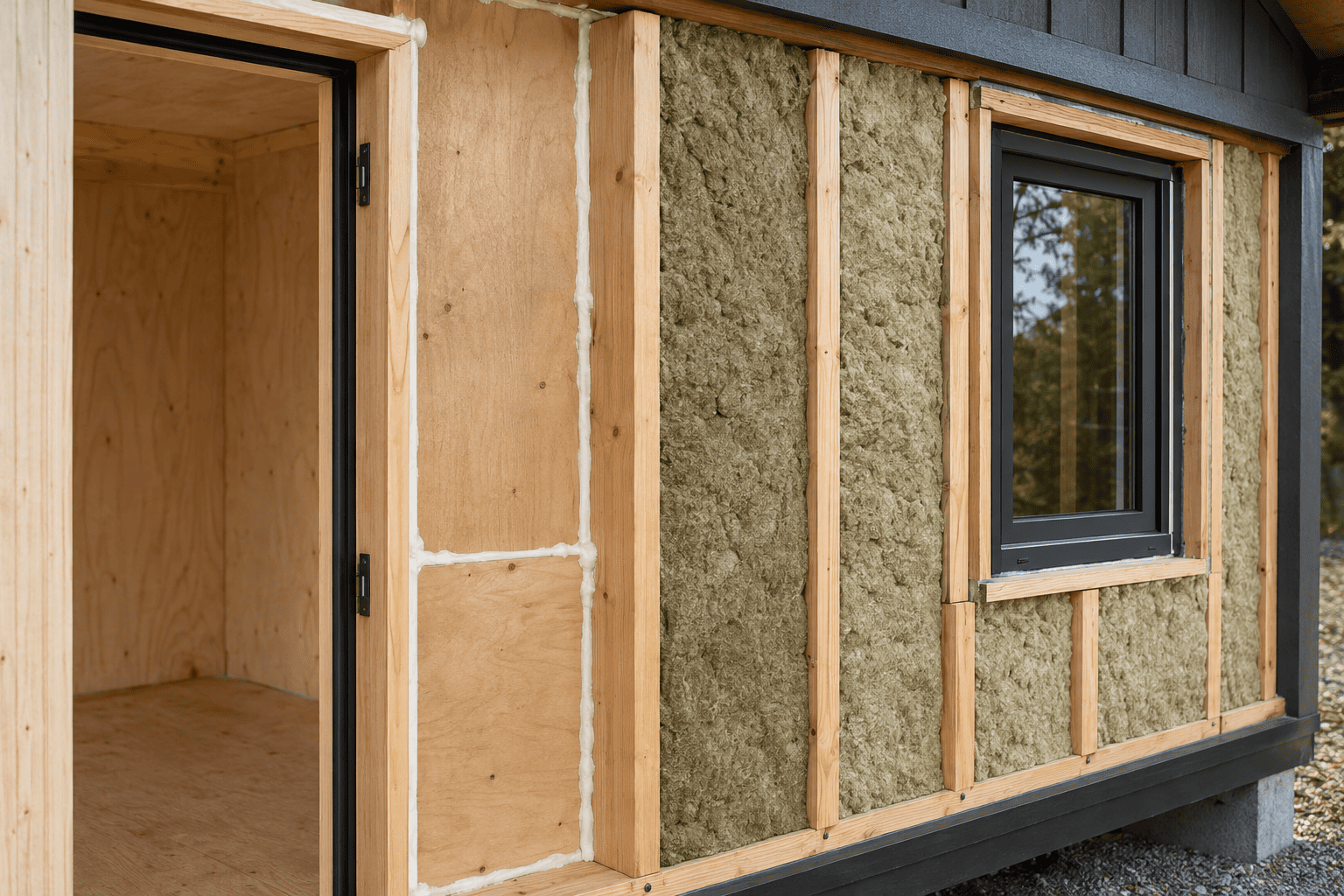
Many people waste money covering every surface with foam panels because they see recording studios doing the same thing. That works for reducing echo inside a room, but it does very little to stop power tool noise from escaping outside. A workshop needs sound insulation, not just sound treatment.
Your goal should be to block sound, absorb vibration, and seal the gaps where noise leaks out. Every improvement adds another layer of noise control, and together they can make your shed noticeably quieter.
Walls usually offer the biggest opportunity for improvement. A basic shed with exposed framing lets sound pass through almost unchecked, while insulated walls slow that process considerably.
A good wall assembly often includes:
- Mineral wool insulation between wall studs
- Plywood or drywall on the inside
- Quality exterior sheathing
- Acoustic sealant around joints and corners
- Well-fitted electrical boxes with sealed openings
Mineral wool is especially popular because it absorbs sound better than standard fibreglass insulation while also offering excellent fire resistance. That makes it a practical choice for woodworking shops where power tools and electrical equipment are used regularly.
The ceiling deserves just as much attention. Many sheds have thin roof panels that allow sound to escape straight upward and beyond your property. Adding insulation above the ceiling and finishing it with plywood or drywall helps reduce both noise and temperature swings throughout the year.
Doors and windows are another common weak point. Even well-insulated walls lose much of their benefit when sound slips through gaps around a lightweight door.
Focus on these areas:
- Install weather stripping around doors.
- Add a door sweep to seal the bottom gap.
- Replace thin windows with double-glazed units where practical.
- Seal every crack with quality acoustic caulk.
- Keep windows closed while noisy machines are running.
The floor also plays an important role because vibration travels easily through it. Heavy machines sitting directly on plywood can turn the entire shed into a sounding board.
Simple ways to reduce vibration include:
- Rubber anti-vibration pads beneath stationary machines
- Thick rubber workshop mats under work areas
- Solid workbenches that do not wobble during use
- Stable machine bases with properly adjusted feet
Dust collectors and air compressors deserve extra attention because they often run for long periods. Many woodworkers build ventilated cabinets lined with sound-absorbing insulation around these machines. The cabinet reduces noise while carefully placed vents allow enough airflow to prevent overheating.
Small Habits Often Matter More Than Expensive Materials
Even the best insulated workshop can become noisy when tools are poorly maintained or used carelessly. A few routine habits can lower noise levels without spending another dollar.
Sharp blades cut wood cleanly and require less effort from the motor. Dull blades force machines to work harder, increasing both strain and noise. The same applies to router bits, drill bits, and planer knives. Keeping cutting tools sharp benefits your projects and your ears at the same time.
Regular maintenance also prevents unnecessary rattles. Loose bolts, worn bearings, vibrating guards, and damaged belts all add extra sound that has nothing to do with the actual cutting process.
You can also reduce noise by changing how you work.
- Complete all cutting tasks in one session instead of running machines throughout the day.
- Turn off dust collectors and compressors when they are no longer needed.
- Avoid dropping lumber or heavy tools onto hard floors.
- Close the shed door before starting loud equipment.
- Keep machines properly balanced and adjusted.
These habits may seem minor on their own, but together they create a workplace that feels calmer, works more efficiently, and causes far less disturbance outside. In many cases, consistent maintenance and thoughtful work routines make as much difference as another layer of insulation.
Good Neighbour Relationships Are Part of a Great Workshop
Even a well-insulated shed cannot make every power tool silent, so a little consideration goes a long way. Most neighbours understand that home improvement and woodworking create some noise. What usually causes frustration is unexpected or constant noise at inconvenient times.
Try to keep your loudest work within reasonable daytime hours. Running a table saw on a Saturday morning is very different from using it late in the evening when people are relaxing or putting children to bed. Grouping your louder tasks into one work session instead of spreading them across the entire day also helps reduce disruption.
Simple habits can make a big difference:
- Let nearby neighbours know if you are planning a longer workshop session.
- Avoid loud machinery early in the morning or late at night.
- Keep shed doors and windows closed while cutting or planing.
- Turn off idle machines instead of letting them run.
- Be willing to adjust your schedule if someone raises a reasonable concern.
Most neighbour disputes begin because people feel ignored rather than because of the actual noise. A friendly conversation is often enough to prevent small issues from becoming ongoing problems.
Build a Workshop You Can Enjoy for Years
A quiet shed workshop is not about eliminating every sound. It is about reducing unnecessary noise so you can work comfortably while respecting the people who live nearby. Thoughtful planning almost always delivers better results than relying on one expensive soundproofing product.
Start with a sensible layout, insulate the walls and ceiling properly, seal gaps around doors and windows, and reduce vibration wherever possible. After that, maintain your tools, work during reasonable hours, and keep communication open with your neighbours. Those practical steps create a workshop that feels more comfortable, sounds much quieter, and remains a place where you can enjoy woodworking without unnecessary stress.
Not sure which plan library fits your project? Here’s a full breakdown of Ryan’s Shed Plans, Teds Woodworking, and free options.