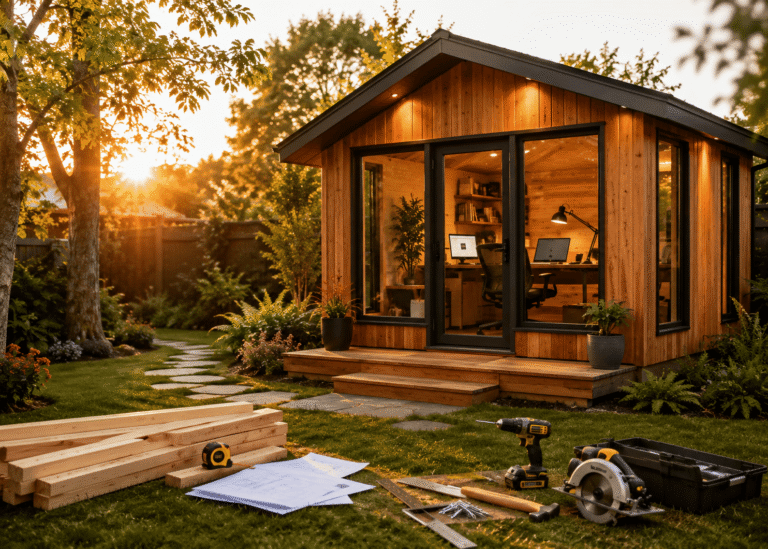
Your shed is only as good as the foundation beneath it. Pick the right one, and your shed stays level, your doors open properly, and moisture stays where it belongs. Pick the wrong one, and you could end up dealing with shifting floors, sticking doors, or expensive repairs a few years down the road.
The good news is that there isn’t one foundation that’s right for every shed. The best choice depends on the size of your building, the type of ground you’re working with, your local climate, and how you plan to use the shed. A lightweight garden shed doesn’t need the same support as a large workshop filled with heavy tools.
This guide explains the four most common shed foundation options: skids, concrete blocks, piers, and concrete slabs. You’ll learn how each one works, where it performs best, and the situations where it makes the most sense so you can build on a solid foundation from day one.
Why your shed foundation matters more than you might think
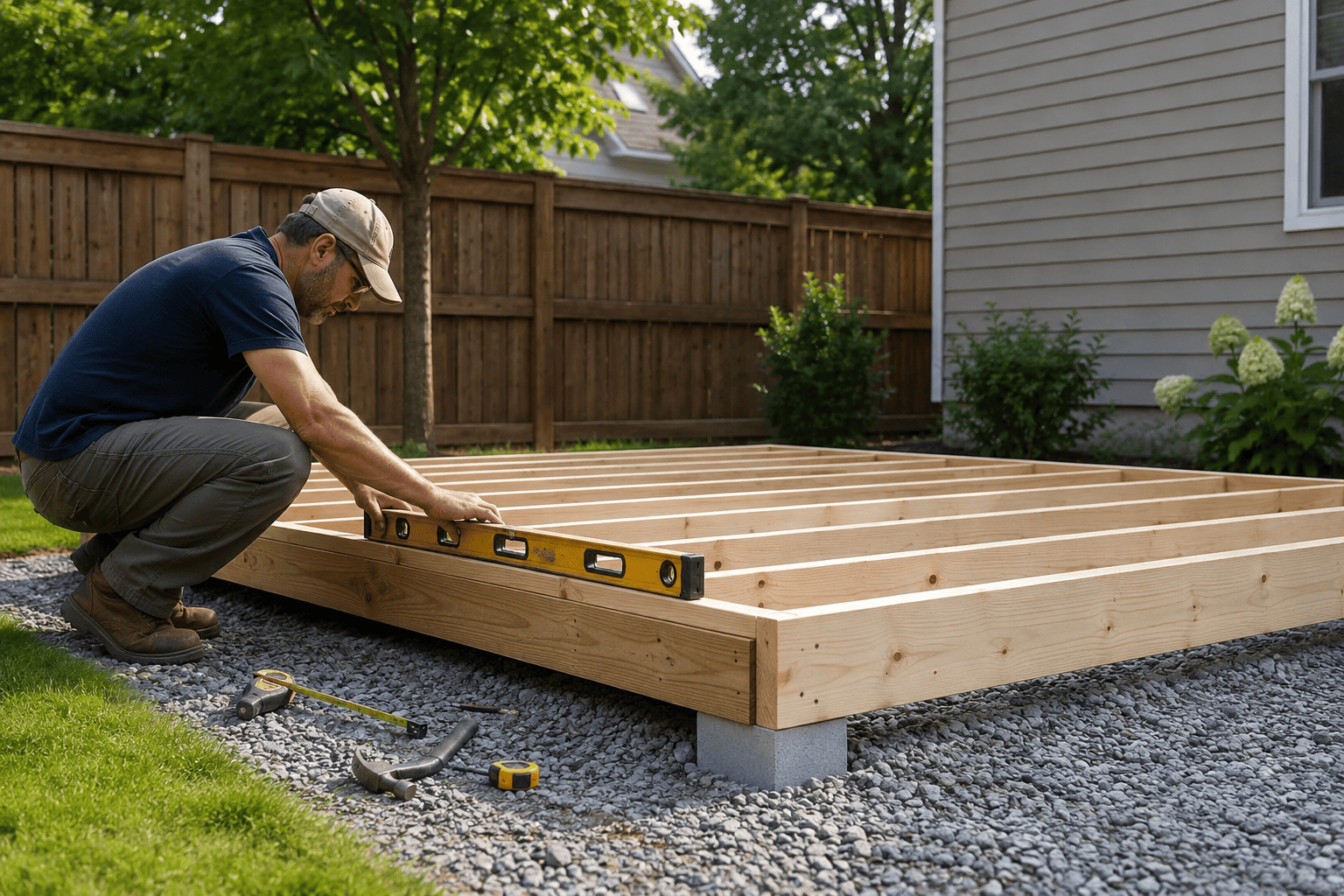
Many first-time builders put most of their attention on the walls, roof, or exterior finish. The foundation often gets treated as an afterthought, but it’s the part of the project that supports everything else.
A properly built foundation spreads the weight of the shed evenly across the ground. It also keeps the structure level as the seasons change, reduces moisture problems, and helps protect the floor framing from long-term damage.
A good foundation provides several important benefits:
- Keeps the shed level over time
- Supports the weight of the structure evenly
- Reduces movement caused by changing soil
- Improves drainage around the building
- Protects the floor from ground moisture
- Helps doors and windows operate correctly
- Extends the overall life of the shed
Ground conditions play a major role as well. Soil that drains well behaves very differently from heavy clay that expands after rain or freezes during winter. A foundation that works perfectly in one location may perform poorly somewhere else.
You should also think about what the shed will hold. A small storage shed filled with garden tools places far less stress on the foundation than a workshop containing heavy machinery, workbenches, or large storage cabinets.
If you’re still deciding what to build before choosing a foundation, this guide to compact shed plans for small yards is a good place to start.
Skid foundations are simple, affordable, and easy to relocate
A skid foundation is one of the easiest and most affordable ways to support a shed. Instead of pouring concrete, the shed sits on large pressure-treated timbers that rest on a prepared gravel base. Those timbers, commonly called skids, spread the weight across the ground while keeping the floor slightly above the surrounding soil.
This design has remained popular for years because it’s straightforward to build and works well for many small and medium-sized sheds.
A skid foundation offers several advantages:
- Lower construction cost
- Faster installation
- Minimal site preparation
- Good drainage with a gravel base
- Easier to move the shed later if needed
- Suitable for many small backyard sheds
Despite those benefits, skid foundations aren’t the best choice for every project. Very large sheds or buildings that will support heavy equipment may require a stronger foundation system. Uneven ground can also require additional leveling before the skids are installed.
A skid foundation is usually a good option when:
- The shed is relatively small.
- You want a budget-friendly foundation.
- Future relocation is a possibility.
- The site has well-drained soil.
- Local building regulations allow this type of construction.
For many homeowners building a standard storage shed, skids provide an excellent balance between cost, simplicity, and long-term performance when they’re installed on a properly prepared base.
Concrete block foundations offer a simple upgrade for many backyard sheds
Concrete blocks are another popular choice because they provide solid support without the cost of pouring a full concrete slab. The shed sits on pressure-treated floor framing, while the blocks support the weight at carefully planned points beneath the structure.
This type of foundation works best on level ground with good drainage. A compacted gravel base beneath each block helps reduce settling and improves long-term stability.
Many homeowners choose concrete blocks because they offer several practical benefits:
- Affordable materials
- Straightforward installation
- No large concrete pour required
- Good airflow beneath the shed
- Easy to level during construction
- Suitable for many small and medium-sized sheds
Block foundations do have limits. Poorly compacted soil can allow individual blocks to settle over time, causing the floor to become uneven. They also aren’t the ideal choice for very large sheds or buildings that will support heavy workshop equipment.
A concrete block foundation is a good fit when:
- The building site is already fairly level.
- Your shed will be used mainly for storage.
- You want a balance between cost and durability.
- The shed is small to medium in size.
Pier foundations handle uneven ground and heavier loads

Pier foundations support the shed on individual concrete footings that extend below the frost line where required. Beams span between the piers to carry the floor framing, creating a strong and stable foundation for larger structures.
This design works especially well on sloped or uneven sites where building a level gravel pad would require significant excavation. Instead of reshaping the entire area, each pier can be installed at the proper height to create a level platform.
Pier foundations offer several important advantages:
- Strong support for larger sheds
- Performs well on uneven terrain
- Better resistance to ground movement
- Excellent airflow beneath the floor
- Suitable for heavier equipment and workshop use
- Long service life when installed correctly
The trade-off is that pier foundations require more planning and labor than skids or concrete blocks. Accurate layout is critical because every pier must line up correctly to support the floor system.
A pier foundation is often the best choice when:
- The shed is larger than a typical storage building.
- The site has noticeable slopes.
- Frost depth is a concern in your area.
- You plan to install heavy machinery or workbenches.
- Long-term structural stability is a top priority.
Concrete slab foundations provide the strongest long-term support
A concrete slab is the most permanent foundation you can build for a shed. Instead of supporting the structure at specific points, the entire building rests on a reinforced concrete surface that distributes the weight evenly across the ground.
This type of foundation is especially popular for workshops, garages, and larger sheds where heavy equipment or vehicles may be stored. The finished concrete floor is also easier to clean than a wood-framed floor, making it a practical choice for projects that involve painting, woodworking, or mechanical repairs.
A concrete slab offers several advantages:
- Excellent long-term durability
- Strong support for heavy loads
- Smooth finished floor
- Less movement over time
- Lower maintenance
- Works well for workshops and larger sheds
The biggest drawback is cost. A slab requires more site preparation, more materials, and more labor than the other foundation options. Once it’s poured, relocating the shed is no longer a realistic option.
A concrete slab is usually the right choice when:
- You’re building a large shed.
- The shed will become a workshop.
- Heavy equipment will be stored inside.
- You want the most permanent foundation possible.
- Future relocation isn’t a concern.
Which shed foundation should you choose?
Each foundation has its place, and the best option depends on your project rather than one foundation being better than the others.
Here’s a quick way to narrow down your decision.
Choose a skid foundation when you:
- Need an affordable option.
- Are you building a small or medium shed?
- May want to move the shed later.
- Have well-drained, level ground.
Choose concrete blocks when you:
- Want a simple DIY project.
- Have a fairly level site.
- Need dependable support for a standard storage shed.
- Want to keep construction costs down.
Choose pier foundations when you:
- Are building on uneven ground.
- Need extra structural support.
- Live in an area with frost concerns.
- Plan to build a larger shed or workshop.
Choose a concrete slab when you:
- Want maximum strength.
- Expect to store heavy equipment.
- Are building a permanent structure.
- Prefer a finished concrete floor.
You should also check your local building codes before making the final decision. Some areas have foundation requirements based on the shed’s size, intended use, or local frost depth. Spending a little time reviewing those rules now can prevent expensive changes later.
A lot of foundation mistakes come from working off a rough sketch instead of a full plan. Good shed plans specify the foundation type, footing depth, and floor framing details up front, so you’re not guessing halfway through the build. Ryan’s Shed Plans includes foundation recommendations with each design, which removes a lot of this guesswork before you buy materials.
Final thoughts
The foundation isn’t the most exciting part of building a shed, but it’s easily one of the most important. Every wall, roof panel, and door depends on having solid support underneath. A well-built foundation helps the entire structure stay level, dry, and stable for many years.
For most backyard storage sheds, skids or concrete blocks provide an affordable and dependable foundation. Larger buildings, workshops, or sheds built on uneven ground often benefit from pier foundations, while concrete slabs remain the best choice for permanent structures that will carry heavy loads.
Matching the foundation to your shed, your property, and the way you plan to use the building will almost always lead to better results than simply choosing the cheapest option. A little extra planning at the beginning can save you countless repairs and frustrations long after the shed is finished.